

Oilandgaspress Energy / Automotive News
London, July 11, 2025 (Oilandgaspress) –-President Trump’s surprise July 8–9, 2025 announcement of a 50% tariff on imported copper (which will come into effect late July/early August) jolted U.S. automakers. Copper futures leaped roughly 15–17% to record highs as buyers scrambled ahead of the deadline, reflecting a new price premium. Copper is vital for EV motors, batteries and wiring harnesses, so the tariff will boost automotive manufacturing costs by hundreds of dollars per vehicle, especially in the case of electric cars.
The sudden move came with little warning. President Trump said the goal is to “bring copper production back home to America,” citing its key industrial role. Meanwhile, traders had already been rushing imports. Bloomberg noted that, in the short term, “the price is going to rise significantly” because markets had expected a lower rate. Read More
Teledyne GFD Partners with Industrial Detection Solutions to localise manufacturing in KSA This partnership will enable the local production of high-precision sensors for detecting toxic and combustible gases, helping to protect workers and assets at oil and gas production/drilling facilities, LNG/CNG plants, and refining and petrochemical sites. A grand opening ceremony will officially declare the plant open on June19th, 2025.
Gas detection is an essential safety aspect throughout the oil and gas industry. With so much activity in the Middle East, Teledyne GFD wanted to bring the production of key gas detection solutions closer to their point of use. This strategy also aligns with the IKTVA (In-Kingdom Total Value Add) programme that promotes local manufacturing in KSA.
IKTVA is an initiative to increase economic diversification and create a sustainable ecosystem in KSA’s oil and gas industry. The programme aims to increase the use of in-Kingdom suppliers, expand local supply chain capabilities and capacities, and drive industry collaboration through supplier development.
By partnering with Industrial Detection Solutions, Teledyne GFD will help to meet the ambitions of the IKTVA via the local manufacture of popular products like its DM-700 toxic gas sensor, and FP-700 and IR-700 combustible gas sensors.
“Our new partnership with Industrial Detection Solutions ensures that manufacturing is closer to both customers and suppliers, enabling even faster delivery of class-leading gas detection products in support of more efficient supply chains,” says Thomas Moeller, VP Sales & Marketing at Teledyne GFD. “The proven solutions manufactured in KSA will better serve a vast regional industry that recognises the importance of a robust and prevalent safety culture. We are proud to be part of KSA’s remarkable ongoing journey of economic and industrial growth, and we look forward to a successful future together.”
The DM-700 is a non-intrusive ‘smart’ sensor that detects and monitors oxygen and toxic gases in the air using electrochemical sensor technology. The intelligent, plug-in, field-replaceable cell automatically recognises gas type and range. Teledyne GFD’s FP-700 is also a non-intrusive ‘smart’ sensor, this time for the detection and monitoring of combustible gases over the range of 0-100% LEL using catalytic bead sensor technology. The IR-700 is a similar solution for combustible hydrocarbon gases. It uses miniature non-dispersive infrared (NDIR) optical sensor technology to detect and monitor gases over the range of 0-100% LEL.
Chevron Supports Central and West Texas Flood Relief Efforts Chevron today announced a donation of $250,000 to three community partners, Community Foundation of the Texas Hill Country, Team Rubicon and the Fuel Relief Fund, to support flood relief efforts in Central and West Texas.
Community Foundation of the Texas Hill Country will receive $100,000 to support local organizations providing rescue, relief and recovery services.
Team Rubicon will receive $100,000 to assess damage, manage volunteers and prepare for large-scale debris removal in the impacted areas.
Fuel Relief Fund will receive $50,000 to supply fuel for volunteer equipment and assist displaced residents and emergency responders.
In addition to the donation, Chevron is introducing a 2:1 employee match contribution program, up to $250,000. This initiative allows Chevron to amplify its own employees’ giving to broaden its impact.
“Chevron has a long history of responding to the needs in communities where we operate. Our partnership with these outstanding organizations will help provide essential aid to those impacted by the catastrophic floods,” said Laura Lane, Chevron Chief Corporate Affairs Officer. “We also extend our sincere appreciation and gratitude to the volunteers and first responders who have worked tirelessly on the front lines of the relief efforts. They are who make us all Texas strong, Texas proud.”
Chevron maintains a significant presence in Texas. With its corporate headquarters in Houston, the company also operates crude oil fields, a refinery, technical facilities and a network of pipeline assets throughout the state.
2025 Audi Q6 Sportback e-tron With the on-sale debut of the 2025 Q6 Sportback e-tron, Audi adds a more dynamic design offering to its state-of-the-art Q6 e-tron EV SUV lineup. Based upon the new Premium Platform Electric (PPE) architecture, the all-new Q6 Sportback e-tron quattro® and more powerful and sporting SQ6 Sportback e-tron quattro feature standard all-wheel drive and the brand’s latest EV engineering to benefit performance, range, charging and efficiency. The all-new 2025 Audi Q6 Sportback e-tron also encompasses the latest Audi advancements in driver assistance, lighting and safety-enhancing technologies. The Sportback models’ progressive silhouettes and emphasis on design aesthetics create exceptional appeal while retaining the day-to-day convenience, comfort and practicality of their Q6 e-tron SUV stablemates. The Q6 Sportback e-tron and SQ6 Sportback e-tron will go on sale before the end of July 2025, with pricing and specifications available now on the AudiUSA.com configurator.
The sleek tapered roofline of the all-new 2025 Audi Q6 Sportback e-tron combines the spaciousness of an SUV with the dynamic profile of a coupe. Sporty and expressive, interior room is enhanced by the long 114.1” wheelbase, and the 4,400-lb towing capacity expands everyday practicality. The aerodynamic body design and large 100 kWh battery capacity (94.4 kW net) of the 2025 Audi Q6 Sportback e-tron helps it earn an EPA-estimated range of 319 miles with its standard 19-inch wheels.

The entire roof arch of the Q6 Sportback e-tron was reimagined by the design team, starting from the A-pillar and flowing gracefully rearward. This results in a Sportback roofline 1.4-in (37mm) lower than the SUV variant, stretching the greenhouse considerably lower and tighter over the vehicle’s sculpted bodywork and signature Audi rear quattro fender blisters. The rearmost window design has a dynamic upward bend, a distinguishing feature shared by all Sportbacks to instill the impression of greater forward thrust, with the backend tapering more dramatically than the SUV.
The Audi Q6 Sportback e-tron also sets new Audi standards for personalization: Depending on the model and trim, up to eight digital light signatures are available for the redesigned daytime running lights in the available Matrix design LED headlights and digital OLED rear lights 2.0, letting owners personalize the appearance of their Sportback via the MMI or the myAudi app.
Renault Boreal: a new signature SUV Renault Boreal is a central pillar of the International Game Plan 2024-2027. As part of this plan, Renault is investing no less than €3 billion to launch eight new vehicles outside Europe. Five of these are positioned in the segments generating the most value: C and D. Between now and 2027, Renault is aiming to double unit revenue per vehicle sold outside Europe compared with 2019.
Developed to win new customers, Renault Boreal shares the DNA of the brand’s latest vehicles. Its role is to balance the sales mix outside Europe, in line with the strategic shift from volume to value initiated by the Renaulution strategic plan. Renault Boreal will primarily target the regions where the brand is still under-represented in the highly strategic C segment. In Latin America, it will address fast-growing demand for family SUVs, while in Turkey, the Middle East and the Mediterranean Basin, it will be a competitive complement to the brand offering in regions , where more than one in two vehicles sold is an SUV.
The industrial strategy for Renault Boreal spans two continents. The Curitiba site in Brazil will produce the vehicle for 17 Latin American countries. At the same time, the Bursa site in Turkey will build it for 54 other markets, including Eastern Europe, the Middle East and Mediterranean countries. Building the vehicle close to its markets will increase logistics agility and optimise production costs.
The deployment of Renault Boreal will begin in late 2025 in Brazil, followed by the rest of Latin America, Turkey and other markets from 2026.
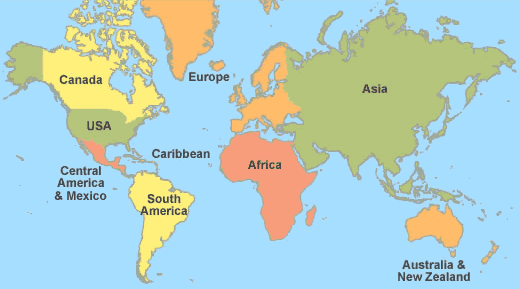
World Must Address Energy Security Threats Governments and policy makers must better anticipate and prepare for energy crises before they happen, drawing from past experience and increasing diversification of supply, predictability in policy, and international cooperation, Fatih Birol, Executive Director at the International Energy Agency (IEA), said on Thursday.
Many tools to tackle energy security today have been developed after crises have hit in the past. Such was the case with the creation of the IEA itself following the Arab oil embargo in the 1970s and with the emergency stockpiles of oil to fend off similar crises.
“Many of the tools we have come to rely on today originally came from actions taken to strengthen energy security after a crisis has hit,” Birol wrote in an article on LinkedIn.
“And in this lies an important lesson – we must better anticipate and prepare for energy crises before they happen, particularly in fast-evolving areas like critical minerals and technology supply chains, electricity and digital security, and climate resilience.”
The IEA praised policies for emergency oil and gas stockpiles in recent years. But the agency has now turned its focus on greater diversification in critical minerals and rare earths supply, as a handful of countries – led by China – have an oversized market share in the supply of materials critical to the global economy, manufacturing, and clean energy advancements.
Autonomous car rental service launched in China Apollo, Baidu’s autonomous driving unit, and CAR Inc, have launched the world’s first autonomous car rental service available to the general public.
Built on Apollo’s Level 4 autonomous driving platform, the service is closely integrated with CAR Inc’s nationwide rental network and fleet operations.
It is the first rental service offering in China to combine fully autonomous driving with a completely self-service process.
Now open for reservations through the CAR Inc mobile app, the service allows users aged 18 and above to book, unlock, and return a self-driving vehicle entirely without human assistance.
The first fleet of custom-designed Apollo vehicles accommodates up to three passengers and is integrated with Baidu’s driverless system to ensure ease of use.
The service’s pricing is aligned with CAR Inc’s existing short-term rental pricing and supports flexible bookings ranging from four hours to seven days, catering to use cases that range from daily commutes to weekend travel.
North Sea to seal abandoned oil wells. Britain’s North Sea operators have been ordered to tackle hundreds of abandoned wells drilled around UK coasts amid fears they could pour polluting oil and gas into the sea.
The North Sea Transition Authority (NSTA), which regulates the industry, has threatened to fine them millions of pounds if they continue to shirk the job. It found there are up to 1,000 wells which have the potential to leak oil and methane into UK waters – a risk that will persist forever unless they are permanently plugged. Some are drilled thousands of metres into bedrock, making plugging them even harder.
The NTSA also warned that many of the drilling rigs needed to find and seal abandoned wells are being pulled out of the North Sea because windfall taxes and new regulations imposed by the Government are wiping the UK industry out.
The NSTA did not name the main culprits, but its ruling applies to all companies operating around the UK now or in the past.
Volkswagen halts electric minivan exports to the United States Volkswagen said Thursday it had suspended deliveries of its electric minivan ID. Buzz due to a technical issue amid reports the decision was influenced by costly US tariffs on cars.
“No electric ID. Buzz models made in Hanover are currently being delivered to North America due to a technical recall mandated by US authorities,” Tobias Riepe, a spokesman for Volkswagen’s commercial vehicles division, told AFP. The van’s rear seats are “deemed too wide for the vehicle”, Riepe said. Citing company insiders, however, German business daily Handelsblatt reported the main reason was high tariffs imposed by US President Donald Trump.
Manufactured in Hanover, the ID. Buzz has since April been subject to a new US tariff of 25-percent on imported cars that are not largely made within North America.
That has made exporting the ID. Buzz into the United States untenable, according to Handelsblatt.
Polestar’s quarterly EV sales jump (Reuters) -Polestar reported a surge in second-quarter sales on Thursday, bolstered by strong demand for its electric vehicles in its home market of Europe, even as it faces challenges in markets such as the U.S.
Shares of the company rose more than 5%.
Demand for Polestar’s EVs has remained resilient in Europe due to offers and discounts, while several other markets have been weighed by high interest rates, inflation and availability of more affordable hybrid or gas-powered options. The tariffs have affected Polestar more than most European automakers because the majority of its cars are produced in China, either by Volvo Cars or Geely. Polestar last week said it would make its Polestar 7 SUV model at a Volvo Cars factory in Slovakia in order to minimize exposure to tariffs. Its vehicle sales in the U.S. fell 56% in the second quarter, Lohscheller said, as the country has seen strong competition and reluctance from consumers to splurge on pricey battery vehicles.
Solar tops EU electricity as coal sinks to new low New data from energy think tank Ember shows that solar accounted for 22.1 per cent of the EU’s electricity mix in June 2025, narrowly overtaking nuclear – and, notably, far outpacing fossil fuels.At least 13 member states hit monthly solar power records, including the Netherlands (40.5 per cent) and Greece (35.1 per cent), thanks to a surge in capacity and a stretch of sunny weather.
The shift also helped the EU manage a spike in energy demand driven by the early-summer heatwaves that continue to batter the continent.
As solar has soared, Europe’s reliance on coal has plummeted.
Just 6.1 per cent of EU electricity came from coal, down from 8.8 per cent a year earlier and its lowest monthly level on record.
Germany and Poland, which together account for the majority of the EU’s coal use, both saw record lows. Germany generated only 12.4 per cent of its power from coal, while Poland’s energy mix still featured a large amount of it – 42.9 per cent overall.
Porsche Macan, almost 60 per cent fully electric Porsche significantly increased the share of electrified vehicles sold in the first half of 2025: between January and June, a total of 146,391 vehicles were delivered to customers worldwide, of which 36.1 per cent were electrified (+14.5 percentage points). These consist of 23.5 per cent fully electric vehicles and 12.6 per cent plug-in hybrids.
The strongest growth among the sports car manufacturer’s six model lines was recorded by the Macan with a 15 per cent increase. The Panamera also performed well, with a 13 per cent increase compared to the previous year. North America remains the largest sales region with 43,577 deliveries, corresponding to a 10 per cent increase compared to last year. This marks a new all-time half year record for the region. The Overseas and Emerging Markets achieved a new all-time record, with 30,158 deliveries.
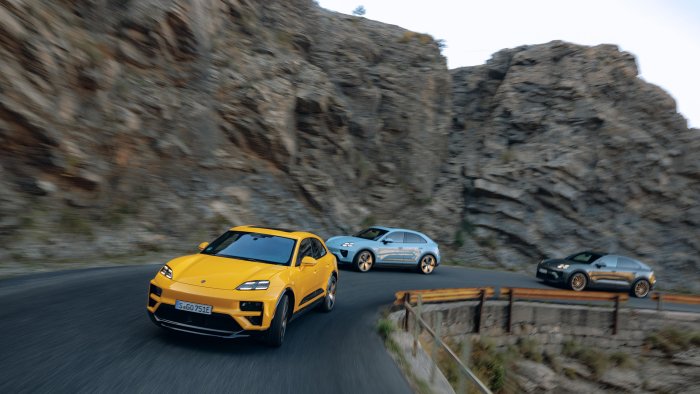
Growth in North America and Overseas & Emerging Markets
North America remains the largest sales region, with 43,577 deliveries and a 10 per cent increase compared to 2024. This marks the strongest first half of the year in the region´s history. The increase is mainly due to higher product availability in the market and the price protection offered in the first half of the year due to increased import tariffs. The Overseas and Emerging Markets also performed well, posting a 10 per cent increase, achieving a new all-time high. A total of 30,158 vehicles were delivered to customers in this region.
In Europe (excluding Germany), Porsche delivered 35,381 vehicles in the first half of the year, representing an eight per cent decrease from the previous year. In the home market of Germany, 15,973 customers took delivery of their vehicles – a decrease of 23 per cent. The decline in both regions is partly due to a strong prior-year period with catch-up effects from 2023.
In China, 21,302 vehicles were delivered to customers (-28 per cent). The primary reasons for the decline remain the challenging market conditions, particularly in the luxury segment, and intense competition in the Chinese market. The focus remains on value-oriented sales aimed at balancing demand and supply. Globally, Porsche remains six per cent below the previous year’s figures in the first half of the year with a well-balanced distribution of sales across the individual sales regions.
Macan is the best-selling model in the first half of the year
In the first half of the year, 45,137 examples of the Macan were delivered to customers (+15 per cent). Almost 60 per cent of these (25,884 vehicles) were the fully electric variant. In most markets outside the EU, the combustion-engined Macan continues to be offered, with 19,253 of them delivered to customers. The Panamera also performed well, with 14,975 deliveries, representing a 13 per cent increase.
Deliveries of the sports car icon, the 911 totaled in 25,608 units in the first half of the year. The decline of nine per cent can be attributed to the strong final sales of the predecessor model in the previous year and the staggered product introduction of the new derivatives. The 718 Boxster and 718 Cayman models recorded 10,496 deliveries, 12 per cent fewer than the previous year. This is primarily due to limited model availability resulting from EU cybersecurity regulations. Production of the current 718 series will be phased out in the fourth quarter of 2025. Between January and June, 8,302 examples of the Taycan were delivered to customers (-6 per cent). The total for deliveries of the Cayenne came to 41,873, a 23 per cent decrease, partly due to catch-up effects during the same period the previous year.
NANO Nuclear Signs a MoU with UrAmerica Ltd. NANO Nuclear Energy Inc. announced that it has signed a Memorandum of Understanding (MOU) with UrAmerica Ltd., a private exploration company with a package of uranium and other critical metals licenses primarily in Chubut Province, Argentina.
The newly signed MOU formalizes the discussions that NANO Nuclear initiated with UrAmerica to explore strategic development across Argentina’s uranium-fuel supply chain. Both companies are now working to evaluate specific opportunities, ranging from mining and conversion to UF₆ feedstock supply, that could aid NANO Nuclear in securing a dependable source of material for future supply chain options. Such evaluations may lead to the signing of definitive agreements between NANO Nuclear and UrAmerica related to particular projects.
Argentina has one of the largest uranium repositories in the world and its government is currently looking into the privatization of their nuclear energy sector, enabling innovators like NANO Nuclear to invest and support the development of the nuclear energy infrastructure in the country. Through this MOU, NANO Nuclear and UrAmerica aim to build the mining and milling capacities of the uranium supply chain in Argentina with the intention to be a part of the uranium fuel cycle exports into the U.S.
Enphase Energy Expands IQ EV Charger 2 in Europe Enphase Energy, Inc. announced that production shipments of its newest electric vehicle (EV) charger, the IQ® EV Charger 2, have expanded across Europe to now include Greece, Romania, Ireland, and Poland. The IQ EV Charger 2 is a smart charger designed to work seamlessly with Enphase solar and battery systems or as a powerful standalone charger. Additionally, in France, the IQ EV Charger 2 has received one of the country’s highest quality standards, the E.V. READY certification, and can now integrate with the “Linky” meter to enable dynamic load balancing for standalone charger installations.
The Enphase IQ EV Charger 2 is designed to deliver high performance, intelligent energy management, and exceptional flexibility for homeowners and fleets. It supports both single-phase and three-phase wiring with configurable power up to 32 A per phase and features automatic phase switching to enable charging with as little as 1.38 kW of solar production. Smart features include AI-powered optimization using real-time rates and forecasts, dynamic load balancing, and a certified MID energy meter for accurate tracking. The charger is also future-ready, with built-in hardware and software to support AC bidirectional charging for potential vehicle-to-home (V2H) and vehicle-to-grid (V2G) applications.
The IQ EV Charger 2 is available in socketed and tethered variants, featuring a rugged Type-2 connector that is fully compatible with the majority of EVs sold in Europe. Installation is fast and efficient, featuring a 7.5-meter cable for added flexibility and a streamlined setup process that minimizes labor time and installation costs. It is housed in an IP55-rated enclosure, making it weatherproof and safe for indoor and outdoor installations. All IQ EV Charger 2 products activated in Greece, Romania, Ireland, and Poland are backed by an industry-leading five-year warranty and 24/7 customer support from Enphase – ensuring exceptional peace of mind.

More Energy, Oil & Gas Stories !!! �The squeaky wheel gets the oil�
OilandGasPress Energy Newsbites and Analysis Roundup | Compiled by: OGP Staff, Segun Cole , victor@oilandgaspress
OilandGasPress.com is a website that provides news, updates, and information related to the oil and gas industry. It covers a wide range of topics, including exploration, production, refining, transportation, distribution, and automotive market trends within the global energy sector. Visitors to the site can find articles, press releases, reports, and other resources relevant to professionals and enthusiasts interested in the energy, oil and gas industry.
Disclaimer: News articles reported on OilAndGasPress are a reflection of what is published in the media. OilAndGasPress is not in a position to verify the accuracy of daily news articles. The materials provided are for informational and educational purposes only and are not intended to provide tax, legal, or investment advice.
Information posted is accurate at the time of posting, but may be superseded by subsequent press releases
“Stay informed with Oilandgaspress.com—your independent source for global energy, oil, gas, EV, and automotive industry news and analysis.”
Submit your Releases or contact us now!, victor@oilandgaspress
Follow us: on Twitter | Instagram
Your Daily Source for Oil, Gas, Renewables & EV Market Insights :
latest oil and gas updates


