


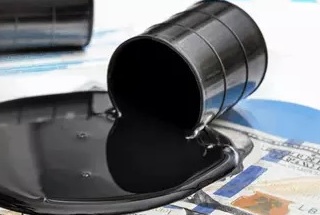
15 Jan Geopolitical risk is at an all-time with oil as the centerpiece.
The continued threats issued by the self-styled White House emperor toward countries as diverse as Greenland and Colombia are yet another destabilizing factor in an already fragile world order. When one examines the figures for global oil reserves, it is hard not to wonder whether the curse of “black gold”—which has blighted much of Africa through corruption and conflict—is now being exported worldwide. Beyond accelerating climate change and global warming, the geopolitical manipulation of oil is increasingly undermining international stability.
If every oil-producing nation were allowed to extract, refine, and trade its crude ethically and independently, the world would be awash with supply, and prices could remain stable and affordable. Instead, aggression, coercion, and bullying dominate the landscape, ensuring that no single actor can truly win. In such a system, the costs are shared globally, and the consequences threaten everyone.
The President of the worlds largest economy has weaponised trade and any form of market rules of supply and demand. He openly gives unreasonable reasons for threatening other oil producing countries in his quest to make “America Great Again”.
In January 2026, U.S. military forces conducted strikes in Venezuela that led to the capture of President Nicolás Maduro and his wife. Maduro was taken into custody and later appeared in federal court in New York on charges related to drug trafficking and other criminal accusations.
Trump has publicly warned regional governments — including Mexico and Colombia — about potential consequences if they do not cooperate with U.S. goals on drug trafficking and regional security. Latin American leaders have widely criticized these warnings as unacceptable external pressure.
The Trump administration announced a 25% tariff on countries doing business with Iran — a punitive trade measure affecting major economies that maintain trade ties with Tehran. The aim of this tariff is to pressure foreign governments economically.
Iran & the Strait of Hormuz: The Systemic Chokepoint About 20% of globally traded oil and gas passes through the Strait of Hormuz.
If Iran:
- Threatens closure
- Harasses shipping
- Mines or restricts the waterway
Then markets react instantly.
Market consequences:
- Insurance costs for tankers spike
- Shipping delays increase
- Asian importers (China, India, Japan, South Korea) face immediate shortages
- LNG prices surge alongside oil
Even a partial disruption could: Accelerate inflation globally
Push oil well above $100 per barrel and Trigger emergency releases from strategic petroleum reserves
Losers: Consumers (higher fuel and electricity prices), Import-dependent economies, Developing nations priced out of energy, Climate commitments
Temporary Winners: Oil traders, Large producers with spare capacity, States using energy as leverage
Ultimate Outcome: More political instability, No lasting winner, More volatility, More inflation
If oil were produced and traded openly, ethically, and without coercion, supply would be ample and prices relatively stable. Instead, militarisation, sanctions, and bullying weaponise scarcity, ensuring higher prices and systemic risk — while accelerating neither security nor sustainability.

Colombia has roughly two billion barrels of proven reserves. The majority owner of the country’s oil production is Ecopetrol, which is also one of the largest companies in Latin America.
Indonesia holds about 2.4 billion barrels. It has become a net importer of oil due to rising domestic demand.
Angola with over 2.5 billion barrels of reserves. The economy is heavily reliant on oil exports, often trading crude for loans and infrastructure deals with China.
Malaysia controls 2.7 billion barrels of oil, with the state-owned giant Petronas responsible for exploration, refining, and distribution.
Argentina possesses about 2.9 billion barrels of reserves. The Neuquén Basin contains massive deposits of shale oil and gas, attracting major investment from global energy companies.
Egypt holds 3.3 billion barrels of oil . It also manages a vital transit route, as tankers transport millions of barrels of oil through the Suez Canal daily.
Vietnam has around 4.4 billion barrels of oil. Most of its production takes place in offshore fields in the South China Sea.
The Sultanate of Oman holds approximately 4.97 billion barrels and is a significant producer in the Middle East. Its location on the Arabian Sea makes it a key shipping hub for global trade.
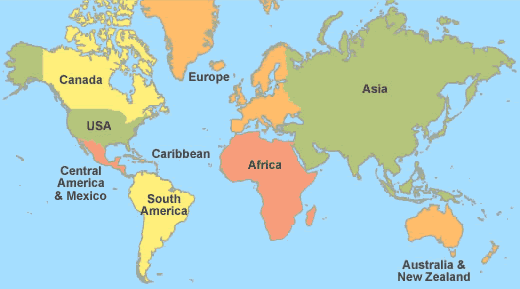
India has about 4.98 billion barrels of reserves. Its massive population creates a huge demand, with 80% of its crude oil demand met by imports.
Sudan possesses about five billion barrels of reserves, but the industry has been severely impacted by the separation of South Sudan in 2011. When the country split, many of the active oil fields ended up in the south, while the pipelines and export terminals remained in the north.
Mexico has a long history as an oil giant, currently holding just over 5.1 billion barrels. Production is concentrated in the shallow waters of the Gulf of Mexico, but output has been declining in recent years.
Norway has more than 6.9 billion barrels of oil, making it Western Europe’s largest producer. Though it exports huge amounts of fossil fuels, it is a global leader in green energy and EV adoption.
Azerbaijan is the birthplace of the modern oil industry, with a history of drilling that dates back to the 19th century. Today, it holds seven billion barrels and serves as a strategic bridge for energy transport between Asia and Europe.
Algeria holds more than 12 billion barrels of oil and is a critical energy supplier for Europe. The economy is heavily dominated by hydrocarbons, which make up almost all of the country’s export revenue.
Brazil discovered huge amounts of oil in the pre-salt layers deep beneath the Atlantic Ocean in 2005. Today, its oil reserves reach nearly 16 billion barrels.
Qatar has about 25 billion barrels of oil, its true economic power comes from being a top exporter of liquefied natural gas. The revenue from these combined energy resources has given its citizens one of the highest average incomes in the world.
China holds roughly 28 billion barrels of reserves, but its massive economy consumes energy far faster than it can produce it. As the world’s factory, the nation is the largest importer of crude oil on the planet.
Kazakhstan possesses about 30 billion barrels of oil, much of it located in the massive Kashagan field located in Central Asia, . The energy sector has attracted billions in foreign investment, helping to modernize the nation’s infrastructure.
Nigeria is a key energy player in West Africa with roughly 37 billion barrels of reserves. The oil industry is centered around the Niger Delta region and accounts for the bulk of the country’s export earnings.
The United States has approximately 45 billion barrels of proven reserves. A significant increase in hydraulic fracturing, or fracking, has allowed American companies to tap into shale oil trapped deep underground.
Libya holds the largest oil reserves in Africa, estimated at over 48 billion barrels. However, political instability and conflict have frequently disrupted production, causing wild swings in the country’s economic output.
Russia is a global energy giant with 80 billion barrels of oil and an extensive network of pipelines reaching across Europe and Asia. The energy sector here is closely tied to the state, with large government-backed companies controlling production.
The Gulf nation possesses roughly 101 billion barrels of oil. Its economy is one of the wealthiest in the world per person, due to the dominance of the petroleum sector.
The United Arab Emirates has around 113 billion barrels. The state-owned Abu Dhabi National Oil Company (ADNOC) manages these resources and is known for using advanced technology to maximize production.
Iraq possesses about 145 billion barrels of proven oil reserves. The petroleum industry is the lifeblood of the nation, providing over 90% of government revenue.
Canada holds the fourth spot with approximately 163 billion barrels, with the vast majority located in the oil sands of Alberta. Extracting oil here is a labor-intensive process that involves separating crude oil from sand and clay, which is more expensive than traditional drilling.
Iran is a major energy heavyweight in the Middle East. With 208 billion barrels underground, Its economy is heavily dependent on energy exports, though international sanctions have often made it difficult.
The Kingdom of Saudi Arabia commands the second-largest reserves on the planet with roughly 267 billion barrels. The oil found here is generally easier and cheaper to extract than in other parts of the world, which leads to high profit margins.
Venezuela holds a staggering 303 billion barrels of oil. Much of this resource is found in the Orinoco Belt, where the oil is heavier and requires specialized processing to turn it into fuel.
Source: Oil Reserves by Country 2026
More Energy, Oil & Gas Stories !!! �The squeaky wheel gets the oil�
OilandGasPress Energy Newsbites and Analysis Roundup | Compiled by: OGP Staff, Submit your Releases or contact us now!, victor@oilandgaspress.com
OilandGasPress.com is a website that provides news, updates, and information related to the oil and gas industry. It covers a wide range of topics, including exploration, production, refining, transportation, distribution, and automotive market trends within the global energy sector. Visitors to the site can find articles, press releases, reports, and other resources relevant to professionals and enthusiasts interested in the energy, oil and gas industry.
Disclaimer: News articles reported on OilAndGasPress are a reflection of what is published in the media. OilAndGasPress is not in a position to verify the accuracy of daily news articles. The materials provided are for informational and educational purposes only and are not intended to provide tax, legal, or investment advice.
Information posted is accurate at the time of posting, but may be superseded by subsequent press releases
“Stay informed with Oilandgaspress.com—your independent source for global energy, oil, gas, EV, and automotive industry news and analysis.”
Follow us: on Twitter | Instagram
Your Daily Source for Oil, Gas, Renewables & EV Market Insights :
latest oil and gas updates
Sorry, the comment form is closed at this time.