


20 Feb China’s Taklamakan Desert turned into a carbon sink that absorbs more CO2 than it emits
(Oilandgaspress) – Mass tree planting in China is turning one of the world’s largest and driest deserts into a carbon sink, meaning it absorbs more carbon from the atmosphere than it emits, new research reveals.
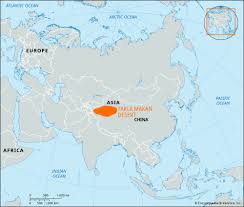
The Taklamakan Desert stretches across about 130,000 square miles (337,000 square kilometers). It is encircled by high mountains, which block moist air from reaching the desert for most of the year, creating extremely arid conditions that are too harsh for most plants.
However, over the past few decades, China has sowed a forest around the Taklamakan’s edges, and a new study suggests this approach is beginning to bear fruit. Over 95% of the Taklamakan Desert is covered in shifting sand, meaning it has long been considered a “biological void,” according to the study. The desert has been growing since the 1950s, when China underwent massive urbanization and farmland expansion. This conversion of natural land created the conditions for more sandstorms, which, in general, blow away soil and deposit sand instead, causing land degradation and desertification.
In 1978, China implemented the Three-North Shelterbelt Program, a huge ecological engineering project intended to slow desertification. Also called the “Great Green Wall,” the project aimed to plant billions of trees around the margins of the Taklamakan and Gobi deserts by 2050. More than 66 billion trees have been planted in northern China to date, but experts debate whether the Great Green Wall has significantly reduced the frequency of sandstorms.
China finished encircling the Taklamakan Desert with vegetation in 2024, and researchers say the effort has stabilized sand dunes and grown forest cover in the country from 10% of its area in 1949 to more than 25% today.
Information Source: Read More
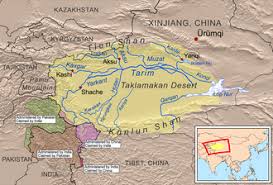
The Takla Makan is flanked by high mountain ranges: the Tien Shan to the north, the Kunlun Mountains to the south, and the Pamirs to the west. There is a gradual transition to the Lop Nur basin in the east; in the south and west, between the sandy desert and the mountains, lies a band of sloping desert lowland composed of pebble-detritus deposits.
Oilandgaspress ,Oil and Gas , Energy , Climate, Gas,Renewable, Sustainability, Oil Price, LPG, photovoltaic, wind, solar thermal, hydropower, biomass.
Sorry, the comment form is closed at this time.