



20 Feb New Book Explores the Geopolitics of Energy Transition Amid Global Climate Challenges
(Oilandgaspress) – As the world grapples with accelerating climate change and mounting evidence of severe weather events, governments and businesses face a stark reality: despite ambitious pledges under the Paris Agreement, most nations have fallen short of their commitments to curb greenhouse gas emissions. The global trajectory remains far from the path required to limit warming to less than 2°C above pre-industrial levels.
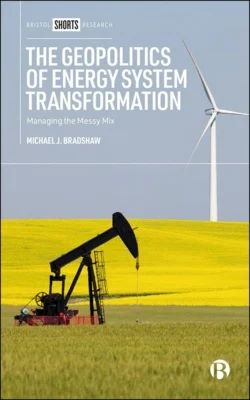
In The Geopolitics of Energy System Transformation: Managing the Messy Mix, Professor Michael Bradshaw offers a timely and critical analysis of the forces shaping the global energy transition such as Russia’s war in Ukraine and conflicts in the Middle East.
A Messy Mix of Challenges and Opportunities
The Global energy system accounts for over 70% of human-generated greenhouse gas emissions, making the shift from fossil fuels to low-carbon sources imperative. Yet Michael Bradshaw, Professor of Global Energy at Warwick Business School and a Fellow of the Royal Geographical Society and the UK Energy Research Centre argues, this transformation will not be linear or orderly. Historical patterns suggest energy transitions take decades, and today’s shift is complicated by competing national interests, supply chain vulnerabilities, and emerging technologies such as AI expected to boost demand for fossil fuels to power data centres.
Professor Bradshaw introduces the concept of the “messy mix,” a dual transition where declining fossil fuel demand intersects with rapid growth in renewables and electrification. This complexity, he contends, demands pragmatic strategies that acknowledge geopolitical fragmentation while accelerating progress toward net zero.
Key Themes Explored in the Book:
• Why historical energy transitions inform—but do not dictate—the pace of change today.
• The clash between gradualist perspectives and S-curve optimists.
• How emerging “electrostates” could reshape global power dynamics.
• The role of geopolitics in driving or delaying decarbonisation.
• Practical steps for governments and businesses to navigate an uneven, unpredictable transition.
Professor Michael Bradshaw, a leading authority on global energy, emphasises:
“Believing in a fast-tracked, Paris-aligned future or a comforting gradualist approach may be appealing, but neither reflects reality. Accepting the inherent messiness of this transformation is essential to managing risks and seizing opportunities.”
Information Source: Read More
Oilandgaspress ,Oil and Gas , Energy , Climate, Gas,Renewable, Sustainability, Oil Price, LPG, photovoltaic, wind, solar thermal, hydropower, biomass.
Submitted By: Media Relations Officer, Warwick Business School
Sorry, the comment form is closed at this time.